Samvit Jñāna Setu (सम्वित् ज्ञान सेतु) is envisioned as a dynamic digital knowledge repository rooted in the timeless wisdom of Bhāratīya Jñāna Paramparā (भारतीय ज्ञान परम्परा). The portal seeks to serve as a setu (bridge) between Paramparāgata Jñāna (traditional knowledge systems) and contemporary Vijñāna (modern disciplines), fostering a meaningful dialogue between the past and the present.
The initiative emerges from the recognition that India’s knowledge traditions—rooted in Śruti, Smṛti, Itihāsa, Purāṇa, and Śāstra — offer a holistic and integrative worldview that is both timeless and adaptable. However, within the contemporary academic and intellectual ecosystem, there exists a growing disconnect between these traditional knowledge systems and modern disciplines.
Samvit Jñāna Setu is envisioned as a civilizational initiative inspired by the spirit of “Ānobhadrāḥ kratavo yantu viśvataḥ” (ऋग्वेद) — Let noble thoughts come to us from all directions. By harmonizing Paramparā (tradition) with Prayoga (application) and Anusandhāna (research), it aspires to create a living bridge of knowledge—one that is rooted in the past, relevant in the present, and visionary for the future.
Greatness of Bharatiya Education System.
Bharatiya education has always been founded on the pursuit of character, ethics, and inner refinement. It sees learning not merely as the acquisition of information, but as the cultivation of virtues that uplift both the individual and society. The following shloka highlights the universal relevance of the ideals born in this sacred land and their enduring value for humanity.
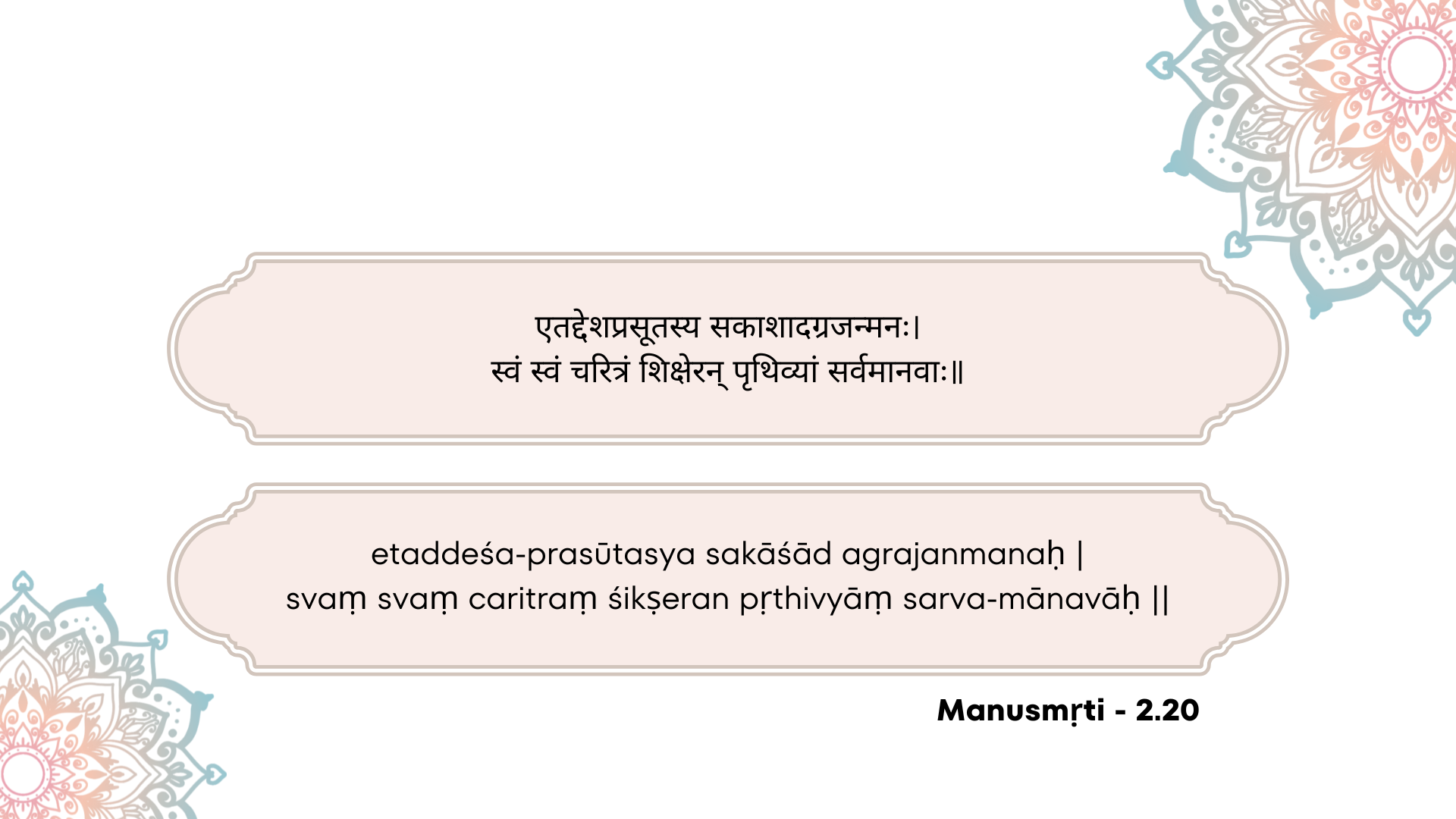
From those born in this land, from the noble elders, all human beings on earth should learn their respective conduct.
Humanity across the world should learn ideals of character and conduct from the noble traditions and exemplary people born in this land (Bhārata).
Bharatiya Pedagogy.
The traditional Bharatiya learning system views education as a collaborative, lifelong process. Knowledge is gained not only from the teacher but also through self-effort, peer learning, and the wisdom that life gradually reveals. The shloka below beautifully captures this holistic pedagogy that nurtures independent thinking, discipline, and shared growth.
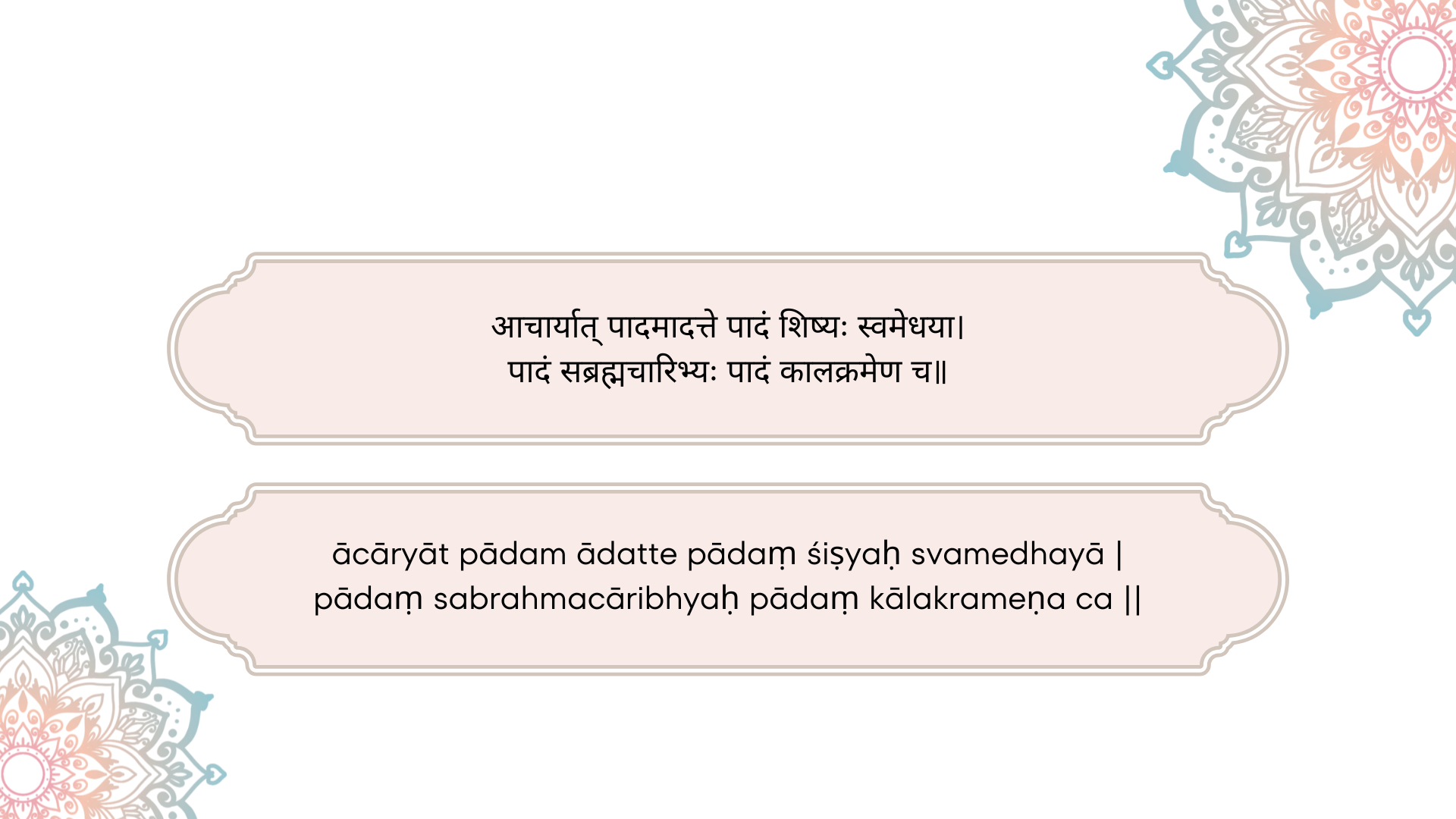
A student receives one quarter (of knowledge) from the teacher, one quarter through his own intellect, one quarter from fellow students, and one quarter in due course of time.
Learning is a holistic process—only part comes from the teacher; the rest is gained through self-effort, peer interaction, and life experience over time.
Importance of Seeking Right Questions.
In the Bharatiya knowledge tradition, inquiry is not just encouraged, it is essential. True learning begins with humility, sincere questioning, and a willingness to serve and learn from the wise. This shloka emphasises the transformative role of the right questions in guiding the seeker toward deeper understanding and truth.
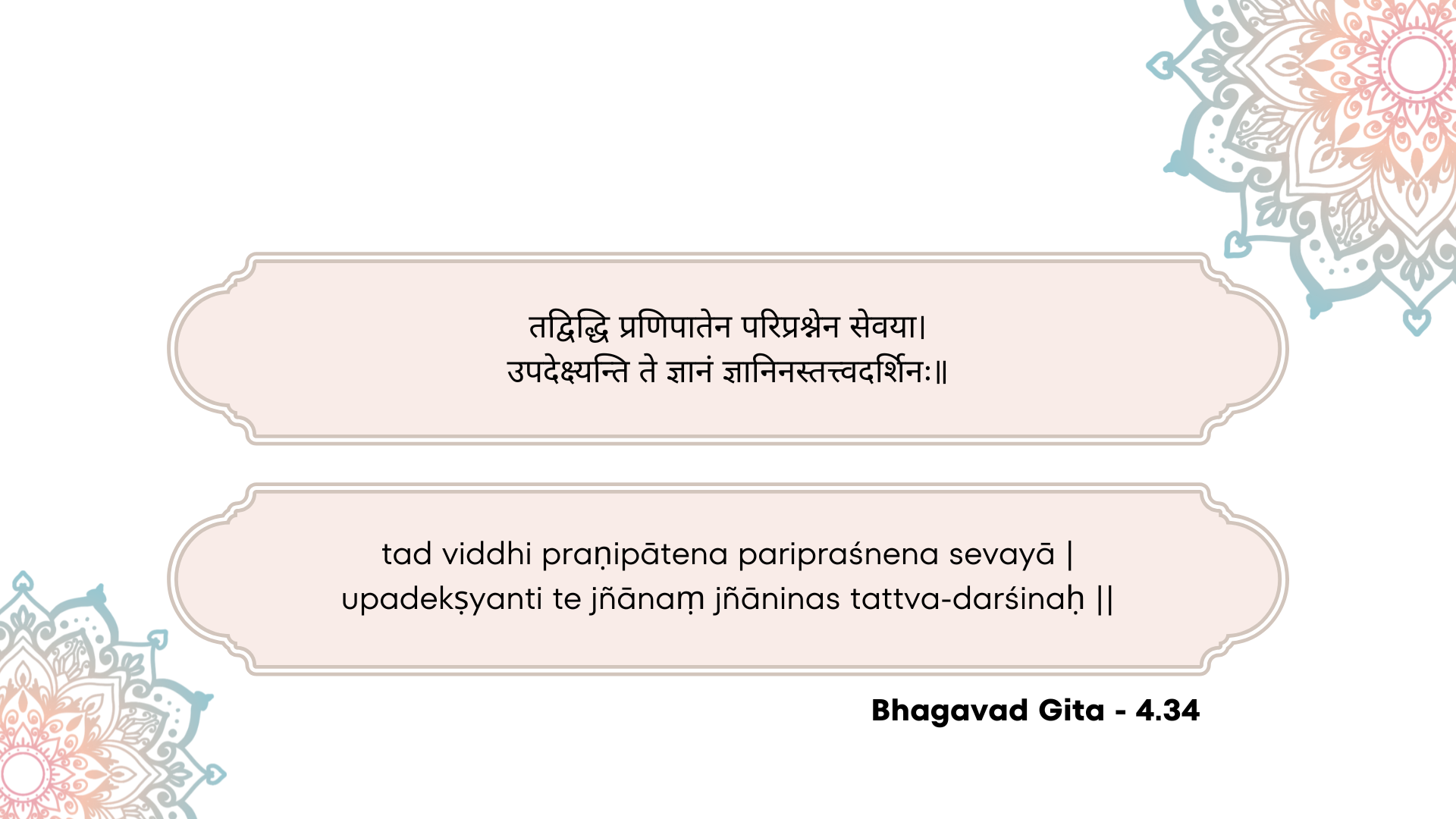
Know that (truth) by prostration, by questioning, and by service.
The wise, who have realized the truth, will instruct you in knowledge.
Approach enlightened teachers with humility, sincere inquiry, and a spirit of service. Those who have realized the ultimate truth will guide you toward true knowledge.
The Cosmic Perspective of Knowledge (Aśvattha Tree).
Bharatiya thought often expresses profound ideas through symbolic imagery. The inverted Aśvattha tree described in the Gita represents the cosmic order—rooted in the Divine and branching into the material world. This timeless metaphor reminds us that true knowledge lies in perceiving the interconnectedness of the universe and understanding its sacred foundation.
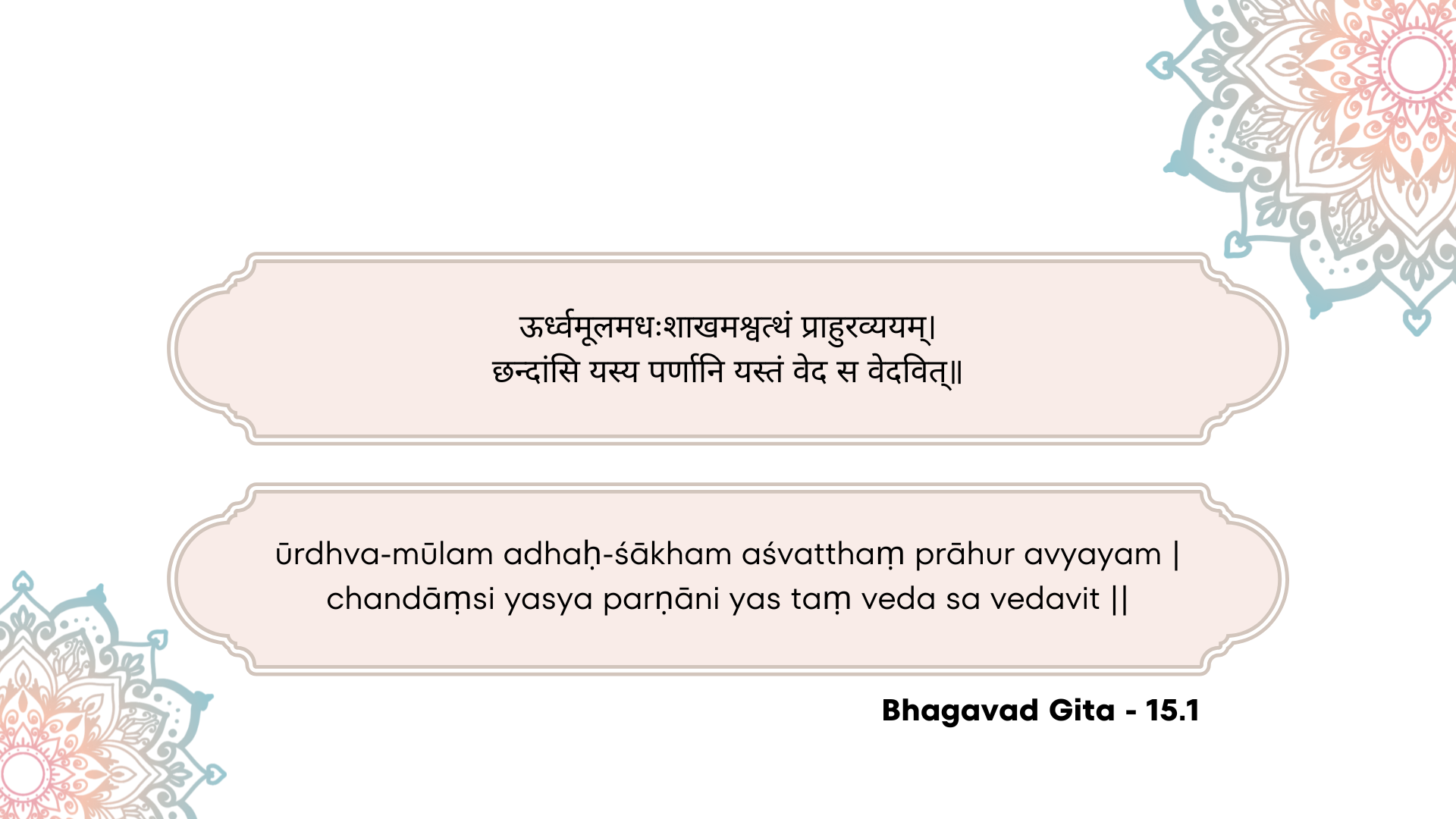
They speak of an imperishable Aśvattha tree with roots above and branches below. Its leaves are the Vedas; one who knows this tree is the knower of the Vedas.
The universe is symbolically described as an inverted sacred tree, rooted in the divine and spreading into the material world. The Vedas are like its leaves, sustaining it. One who truly understands this cosmic structure understands the essence of the Vedas.
True Knowledge and Liberation.
Bharatiya philosophy distinguishes between knowledge that liberates and knowledge that merely informs. While skills and crafts support worldly life, only the wisdom that frees one from bondage is considered true Vidyā. This shloka underscores the higher purpose of learning—moving from effort-driven action to enlightened understanding.
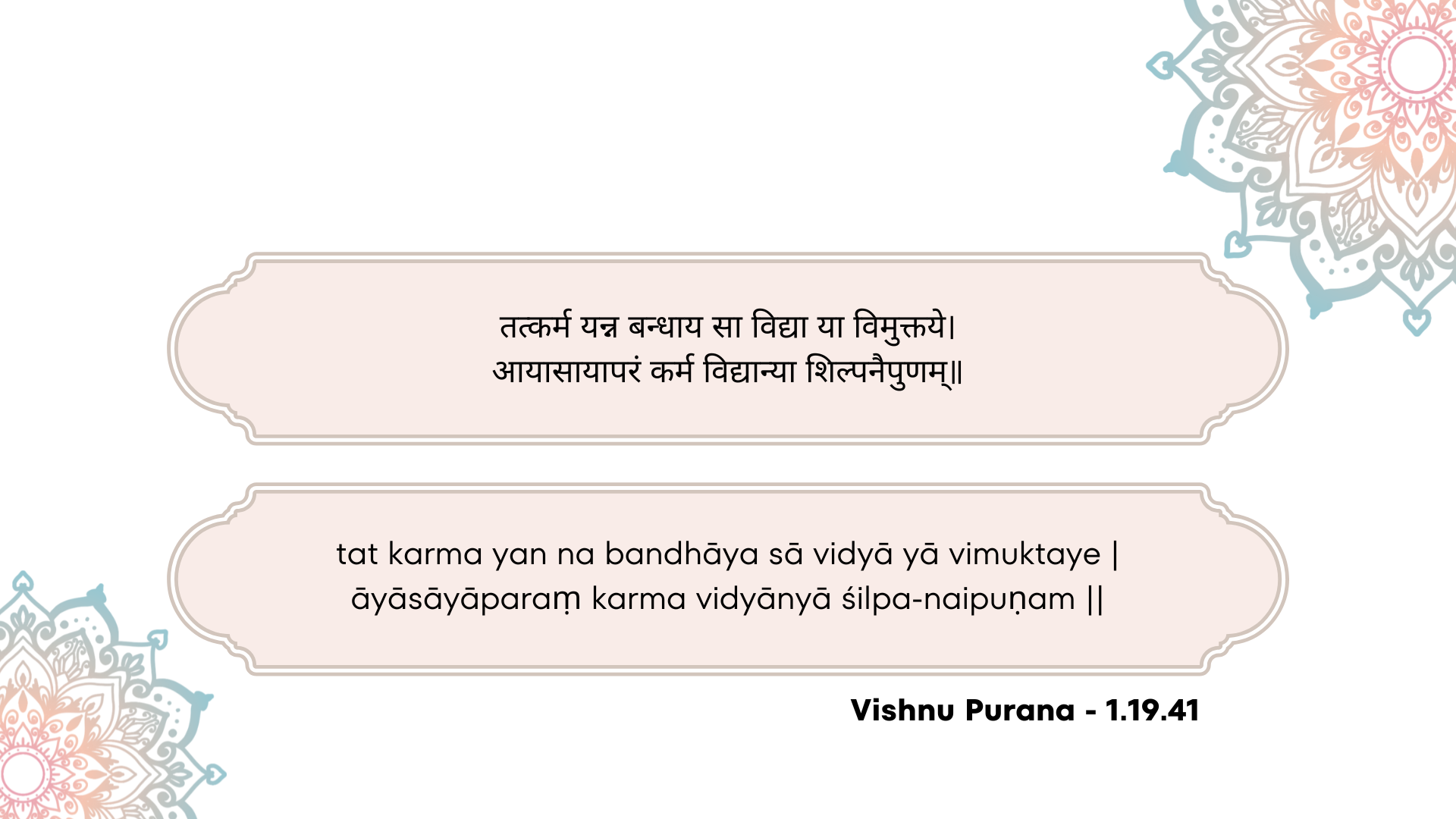
That action which does not lead to bondage – (that alone is true) action; that knowledge which leads to liberation – (that alone is true) knowledge. All other action is merely for exertion; other knowledge is just skill in crafts.
True action is that which does not bind one in worldly consequences, and true knowledge is that which liberates. All other actions merely cause fatigue, and other forms of knowledge are only technical skills without higher purpose.
Vidyā as the Highest Wealth.
In the Bharatiya tradition, Vidyā is celebrated as the finest adornment of human life—subtle, secure, and uplifting. It grants inner joy, dignity, and lasting fulfilment, far beyond material riches. The shloka here highlights knowledge as a treasure that enhances one’s character and illuminates one’s path.
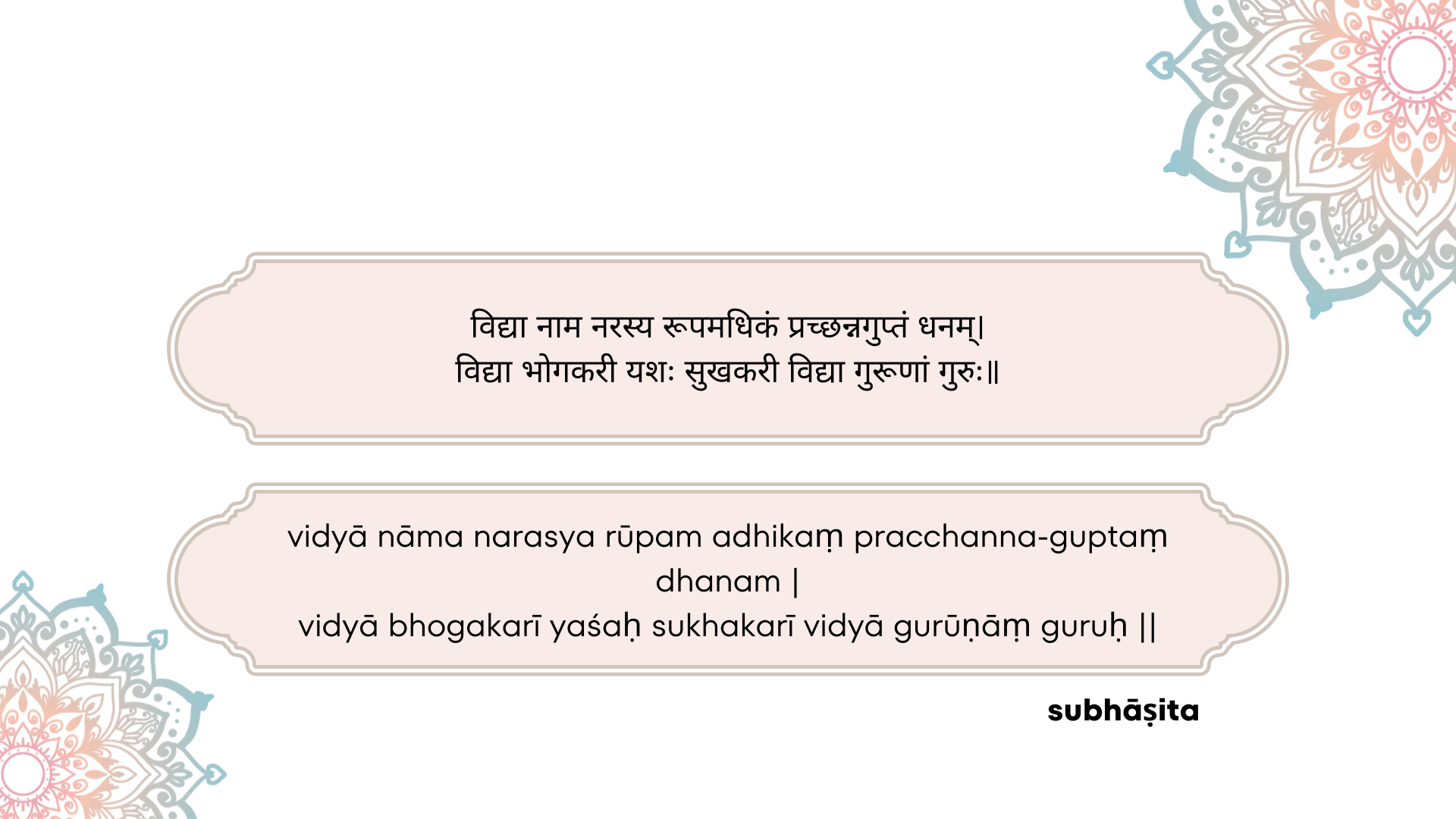
Knowledge is indeed a man’s superior form (beauty); it is a hidden and protected wealth. Knowledge bestows enjoyment, fame, and happiness; knowledge is the teacher of teachers.
True knowledge is the highest adornment of a person and a treasure that cannot be stolen. It brings prosperity, reputation, and inner fulfilment, and stands above even the greatest teachers.
Vidyā as the Pathway to True Happiness.
Learning in the Bharatiya tradition is not just intellectual acquisition but a transformative force that refines character and uplifts life. True knowledge cultivates humility, which makes a person worthy of responsibility and trust. Worthiness brings prosperity, and prosperity enables the practice of dharma. Through dharma arises lasting happiness and inner fulfilment. This shloka beautifully captures this elevating journey that knowledge initiates within an individual.
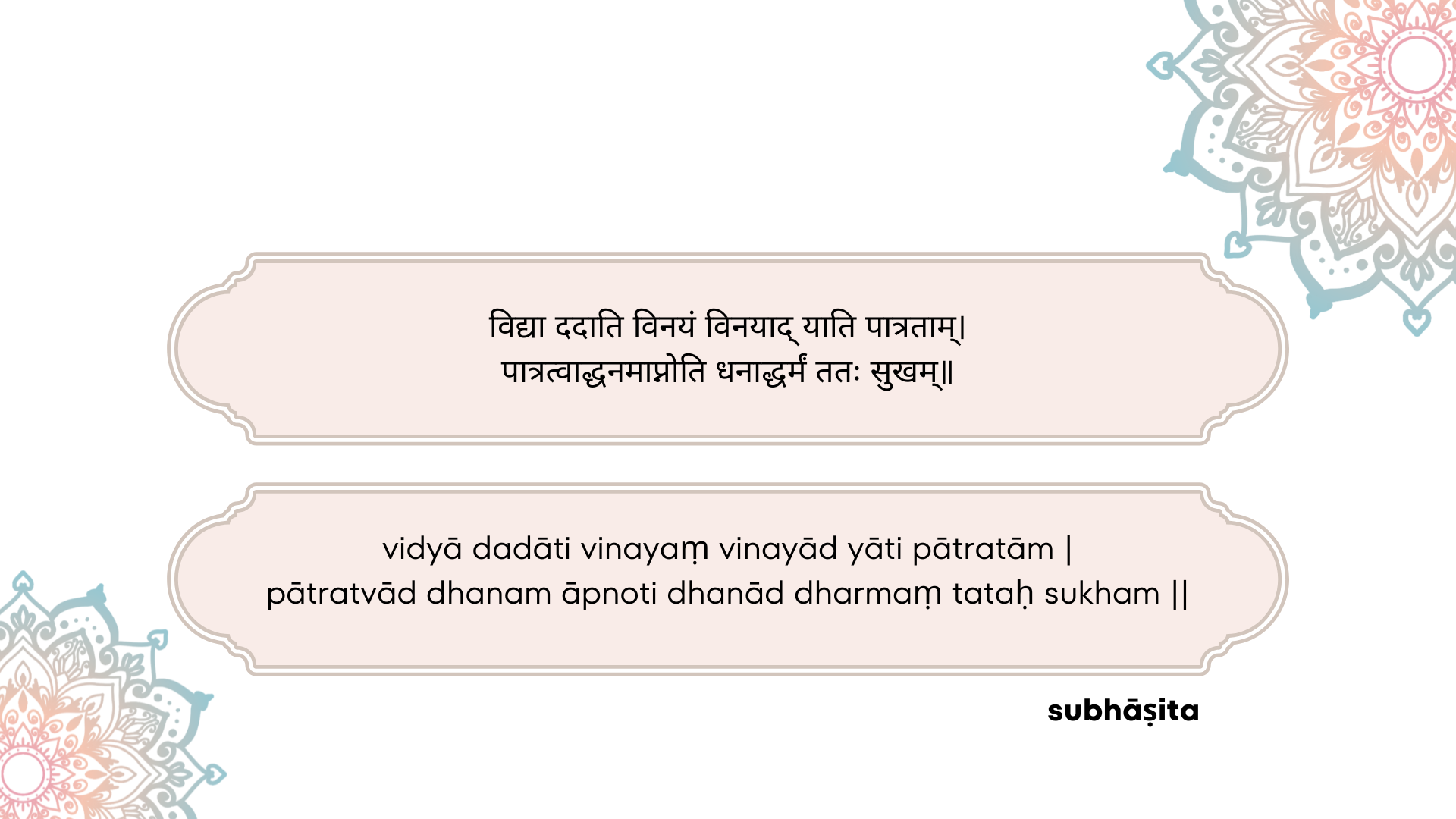
Knowledge gives humility; from humility comes worthiness
From worthiness, one obtains wealth; from wealth, righteousness; and from that, happiness.
True education cultivates humility, which makes a person deserving. This leads to rightful prosperity, which when used for dharma, ultimately brings lasting happiness.
Articles & Research.
Read articles and research notes that offer clear, thoughtful explorations of key concepts, traditions, and contemporary applications of Bharatiya Knowledge Systems.

Comments are closed.